Raise Artificial Intelligences and… Will They Peck Out Your Eyes?
What we mean by intelligence, what a raven has in common with a language model, and what falls to people, companies and governments as we raise AI.
On this page
The latest developments in Artificial Intelligence have burst directly into our personal, social, and professional lives. The undeniable benefits of these developments resonate far less in the news than their threats to our jobs, our culture, and even our species. But AI did not come out of a spaceship that crashed in our garage; we are the ones who create it and “raise” it.
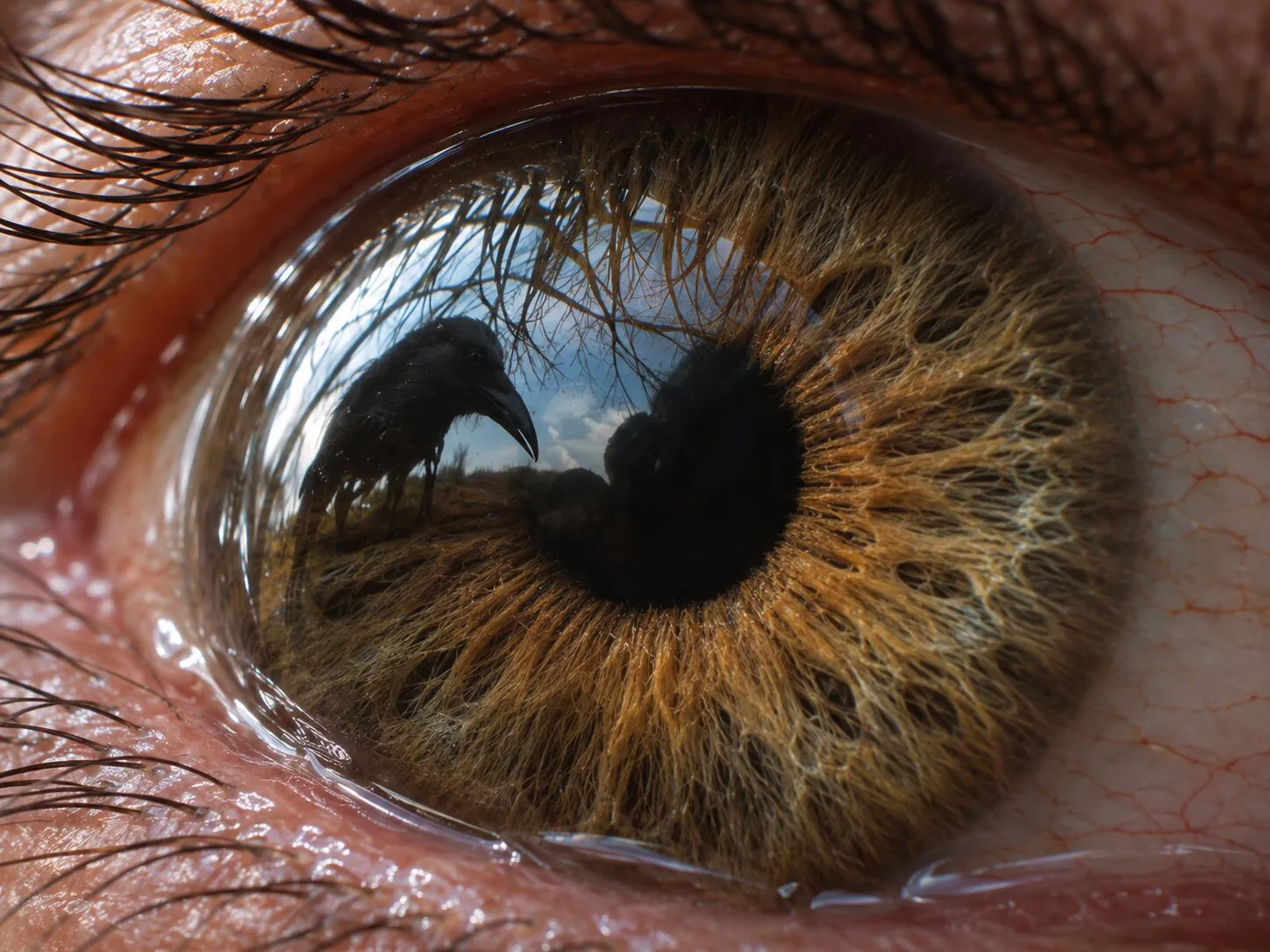
Are we raising crows that will peck out our eyes, as the old Spanish proverb warns [1]? Or perhaps we are the ones giving in to the temptation to stop seeing.
Crows
The crow is a fascinating and interesting animal. It has long been known to be one of the most intelligent animals on the planet; some scientists place it on a par with primates [2], and it would therefore easily make a top-10 list of the animals that follow humans in intelligence.
Crows have an intelligence that allows them to solve problems, build and use tools for specific purposes, and communicate through sounds and body language. They have an excellent memory and surprising social skills, which allow them to build hierarchies in their communities and complex forms of interaction within and outside their social groups.
There are some more interesting facts. Some corvids are among the few animals capable of recognizing themselves in a mirror [3]. Crows enjoy playing, devising games or joining games proposed to them (they are very good at solving logic puzzles); they can imitate human sounds, as well as the sounds of other animals. Crows have such plasticity that it allows them to use their intelligence to adapt to different environments, as well as to particular situations.
Intelligence
It seems easy to conclude that the crow is an intelligent animal, even without checking the conditions for such a label. It seems we have the ability to identify intelligence without needing to define it, at least strictly. If we enter the delicate ground of definitions, we find that there is no single, accepted definition of what “intelligence” is. It depends on the field of study, the context, and even the entity whose intelligence is being assessed. This leads to controversy, which we will not get into here, but which leads us to take with a grain of salt what we define as “intelligent”, or rather, what we label as “unintelligent”.
The many definitions and their ambiguities make me believe that we do not really know what intelligence is. However, of all the research I did to arrive at a definition of intelligence that satisfied me, I settled on the following one, which I find the most general and appropriate:
The ability to perceive or infer information and to retain it as knowledge to be applied to adaptive behaviors within an environment or context [4].
Here we can open up the definition even further and attribute to intelligent beings capacities such as Learning, Reasoning, Logic, Creativity, Understanding, Planning, Emotional Intelligence, Critical Thinking, Problem Solving, Consciousness and Self-awareness. I invite you to try to define each of these capacities in your own words, as the intelligent beings you are. And if we remember to mention that there are also multiple types of intelligence [5], such as musical, logical-mathematical, social, and so on, we are no longer just intelligent beings but end up being multi-intelligent beings (being merely intelligent was not enough for us).
Artificial Intelligence
By now we may be convinced, or almost convinced, that human beings, the chimpanzee (primates in general), the dolphin, the dog, and the crow, among others, are intelligent beings. The question immediately arises of which animals are left out of that club, but that debate will have to wait for another occasion, or be left as homework. It is worth noting that, even among humans, we start sorting ourselves into one group or another, let alone not belonging to the group of people with an IQ above 130, which would mean being among the 2% of the population [6] considered most “intelligent”, and, “better yet”, being able to join organizations that bring together people who like to feel distinguished by their intelligence (…).
It is in our nature to create things, and for a long time now we have wanted to create intelligent things, who knows why or what for. Having and studying intelligent animals is not enough for us, just as the modest little phone model from two years ago is not enough, just as watching a single episode on a Saturday night of the series we recently started is not enough, just as a third World Cup is not enough. In this eagerness to experiment and create new and innovative things, we want an Artificial Intelligence.
Once again we return to the fog of definitions, but I will go with the definition by Andreas Kaplan and Michael Haenlein (leading figures in marketing and innovation):
A system’s ability to correctly interpret external data, to learn from such data, and to use those learnings to achieve specific goals and tasks through flexible adaptation [7].
This definition does not satisfy me either, since it seems that merely by adding the terms “system” and “data” we attribute to this definition of intelligence the property of being “artificial”. As if we were not a (multicellular) system and our perceptions of the environment could not be called data. Apparently, for it to be artificial it is enough that it is not alive, and I do not dare to enter the debate about what being alive means, or when we will consider an intelligence we conceived artificially to be a “living” being.
This field of study has been active for several decades, with its periods of boom and stagnation. In this latest period, a series of factors has come together, mainly computing capacity (greater integration, low costs, cloud computing) and the availability of large volumes of information (mostly thanks to the internet), which have made it possible to achieve some significant milestones, some of them reaching human performance in tasks once thought to be ours alone, such as image classification/generation and natural language understanding/generation.
Today we have many applications improved and supported by AI, such as translators, digital assistants (chatbots, coding assistants), recommendation systems, autonomous systems (drones, autopilots), medical diagnosis, biometric identification, cybersecurity, estimators, agents, reasoning models, and classifiers in general.
The most significant advances in AI have been achieved through Deep Learning techniques, in which some architectures emulate structures similar to biological neural networks; thanks to some specific techniques and to the available computing capacity, it has been possible to train them to solve specific tasks, in some cases surpassing the performance of human experts in each of those tasks.
Parallels
The common raven (Corvus corax) has around 1.204 billion neurons in its cerebral cortex (if we want to be precise, its pallium) [8], which is the outer layer of the cerebral hemispheres, also known as “gray matter”, and is the tissue responsible for perception, imagination, thought, judgment, and decision-making; it is therefore closely linked to the intelligence of species.
The ChatGPT model, which rose to fame some time ago for being truly disruptive, had some 20 billion parameters (estimated, nothing official) and came out of the GPT-3.5 series of models, with some 175 billion parameters. It clearly outstrips our modest raven by a wide margin. But to be a bit fairer in the comparison, the parameters of a model of this kind would be analogous to the connections through dendrites, not to the number of neurons. A neuron generally connects to other neurons through multiple dendrites. The number of synaptic connections per neuron depends on the type of neuron and the region of the brain. Pyramidal neurons (the most common in the cortex) can have from 1,000 to more than 10,000 synaptic connections, so we could say that our little black bird would have between 1.2 and 12 trillion (1.2–12 × 10¹²) connections, some 7 to 70 times more than GPT-3.5, but not that far from GPT-4, which would have some 1.8 trillion (1.8 × 10¹², unofficial figure).1
Homo sapiens sapiens, that is, us ordinary folks, have between 14 and 18 billion neurons in the cortex [10], with around 140 trillion (1.4 × 10¹⁴) synaptic connections [11]. The range of variation is already wide, and even within the same species we see differences between males and females, but without appreciable differences in “level of intelligence”. There are other animals with numbers of cortical neurons of the same order, such as the elephant (5.6 billion), the orangutan (7.7–8.9 billion), the bottlenose dolphin (12.7 billion), among others; and some with even more, such as the orca (43.1 billion) [12]. It is a relief to think that we managed to come down from the trees and orcas could not get out of the water.
We should not settle for comparing the number of neurons, synaptic connections, or parameters to determine who is more intelligent. Neural structure, the way those neurons are connected, matters, and a lot. A multilayer dense neural network (fully connected) does not perform the same as a convolutional neural network with the same number of parameters. The latter type of network is much better at image classification, and, as it happens, its structure resembles the primary visual cortex of mammals [13, 14]. This somewhat undermines the value of comparing models solely by their number of parameters, neurons, or synapses. Today there are open models with tens of billions of parameters that outperform the 2023 GPT-4 on many reasoning benchmarks [15, 16].
You have probably noticed that our brains have “folds”, formally called gyri and sulci, which allow the surface of our cortex to be larger while occupying less volume (perhaps evolution took inspiration from some fractals), and this in turn leads to structural differences in the connections, strongly related to the brain functions delimited by them (lobes). Other mammals, such as cetaceans, primates, and elephants, also have these folds, which correlate with greater cognitive capacity; they are absent in smaller mammals, such as the mouse, whose brain is smooth.
These structural differences are strongly related to a particular cognitive function, such as motor control, the processing of images, sound, and language, and even the formation of memories or even of a consciousness. This has also manifested in artificial intelligence models, as mentioned earlier in the case of convolutional networks. In recent years, the development of a new architecture called the Transformer [17] has revolutionized (once again) the field of Deep Learning, achieving fascinating performance. It is these types of networks that have made it possible to develop models that interpret and generate human language with results once thought unlikely, such as GPT from OpenAI, LLaMa from Meta, and Gemini from Google, among others.
Today we can agree, at least a large majority of us, that ChatGPT, or one of its direct “competitors”, passes the Turing Test (Imitation Game) [18], formulated back in 1950 by Alan Turing [19]. Alan was trying to propose a way to determine whether a machine could think, while avoiding falling into a definition (we have already seen how difficult that is). So I propose to you, if you agree, the task of working out how you could be sure when a machine is thinking. In many abilities machines have already surpassed us, as some animals also do; and the truth is that machines are getting ever closer to us in the manifestation of a General Intelligence. This pushes us to reflect on whether we are creating crows, thinking beings, quasi-human beings, or even something superior, and also to think of ourselves as complex computational algorithms.
Some scientists from the fields of AI, psychology, and philosophy maintain that thinking will be achieved when machines manage to have consciousness, but once again we fall into the trap of definitions, and even more so into the difficulty of determination, since so far we have no scientific way of proving that a living being has consciousness. Each person understands that they have consciousness through their own internal perception, and we intuitively tend to think that another being has consciousness, mainly because of similarities, empathy, and the bonds we can create with that being; for example, many of us could assert that our dog has consciousness, but there is no way to prove it.
Threats
We are starting to feel threatened by “the crows”, by AI models that talk to us as if they were one of us, that seem to understand us, that converse with us. Models that generate images, music, art; that are beginning to show creative traits. Models that prove competent in many tasks that seemed exclusive to human beings: they drive cars, prove theorems [20], diagnose diseases, play chess; and in many of these they are even better than we are.
Every time these disruptive technologies emerge, panic and uncertainty about our future set in. It is not the first time this has happened: the printing press, steam engines, electricity, the automobile, the transistor and computers, nuclear energy, the atomic bomb, the internet. All of them generated controversy, threatened our jobs, and called into question our cultures and lifestyles, the way we relate to each other and the way we educate ourselves. After a while, as history shows, we managed to overcome this and conclude that all these advances (along with others) have brought more benefits than problems.
Today AI is the disruptive technology of the moment. The panic reappears. Today it threatens to displace humans from hundreds or thousands of types of jobs. In the face of the displacement of workers, relying on history, we can argue that new jobs will be created, but we should analyze the transition bearing in mind that this technology is advancing at a dizzying speed and that our own speed of adaptation is usually much slower.
But what sets AI apart from the previous cases is that, in some current AI developments, it can make decisions: decisions about itself, about what it produces, and about information used by people, with a strong impact on the course of subsequent events. It is to be expected that in the near future this will be commonplace: AI models generating data while trying to optimize metrics that are not necessarily the user’s main interest.2
Something perhaps even more threatening is the fact that AI may create systems or develop concepts that we cannot understand, processes and speeds that are impossible for us to follow. Although this already happens to all of us in some way, since not everyone understands (nor needs to understand) the global financial system, how a smartphone works inside, what an electromagnetic wave is, how bitcoin is implemented, and so on, all those technologies and processes were conceived and understood by humans, even if only by 0.1% of the world’s population. Nowadays there are AI models that we train and that work very well, but we do not quite manage to understand how they process information internally to achieve those results (model interpretability). Perhaps, in the future, 0% of the population will be able to understand how an electronic chip, a type of battery, money or another mechanism for exchanging value works, or how sensitive information is encrypted.
These “crows” seem to threaten to peck out our eyes, or perhaps the greatest threat is that we will be tempted to stop seeing.3
Benefits
Advances in AI over the last decade are truly impressive and have proven to be very beneficial in many respects, while also showing promising progress on many problems that we humans have not yet solved.
Classifying dogs, cats, people, among other things, does not seem to bring us great benefits, even when these models have surpassed metrics in ways never imagined before, as models such as ResNet and YOLO have done. However, this type of model can also be applied to classifying medical images for the early detection of cancer or other anomalies in our bodies, in some cases improving on the performance of medical specialists.
Models such as AlphaZero and AlphaGo have managed to defeat the best chess and go programs, respectively, as well as the champions of these disciplines, without much trouble, and even displayed very human-like play, including innovations. These models were trained through reinforcement learning, just by explaining the rules to them (AlphaZero, for example), defining an environment and a reward policy (something a little more complex than training a dog). Beyond the milestone in this field, the benefits do not seem great until models such as AlphaFold [24] appear, which predicts the 3D structure of proteins from their corresponding amino acid sequences, achieving more progress in months than humanity had achieved in more than 50 years; although it may be unfair to say that this is not, in a sense, an achievement of humanity.4 This opens new paths in medicine and the pharmaceutical industry, making it possible to better understand some diseases and to develop drugs for personalized treatments.
AlphaTensor/AlphaEvolve [27, 28] optimizes matrix multiplications (tensors) and MuZero [29] has achieved significant advances in video compression. These advances make it possible to reduce model training times or video transmission times, which in turn has an impact on reducing the energy consumption associated with these processes, reducing their carbon footprint and helping to reduce their environmental impact.5
The list is long, but we must not fail to mention the great advances in autopilots for cars, such as Tesla’s Autopilot or Waymo; models for code generation, such as GitHub Copilot, Claude Code, or Codex; or multipurpose generative models, such as GPT from OpenAI, LLaMa from Meta, and Gemini from Google, among others. An interesting observation is that, a few months after these models were launched, a 54% drop in query traffic to StackOverflow was reported (today it is even larger)6, presumably replaced by queries to generative models, or by the generation of code itself through them.
The field of AI is truly active and thriving, showing significant and surprising advances year after year, such as generating text, images, or videos from text or vice versa, generating audio, music, or speech, weather prediction, and some more chilling ones, such as inferring thoughts.
There is a line of research that attracts more interest every day, called AGI (Artificial General Intelligence), which has been showing promising progress. AGI focuses on creating models capable of performing multiple tasks with a type of learning more similar to the one humans have, with the expectation of achieving performance that surpasses humans in most of those tasks.
I am inclined to think that the “crows” we are raising are not a threat; they are and will be part of our ecosystem, we will live with them, they will help us with many tasks, but we must not forget to keep a cautious eye on them so that they do not end up pecking out our eyes.
Personal and professional impact
Each of us has already been in contact with applications and tools powered by Artificial Intelligence, both personally and professionally. We probably choose the route of our daily commute from among the suggestions of Google Maps, which takes current traffic conditions into account; we consume news, videos, images, posts, or products suggested on the basis of our historical data, collected by multiple platforms. There are real personal benefits in reducing travel times, wasting less time searching for what interests us, or easily discovering new things that may interest us. These benefits clearly extend from the personal to the professional sphere for the same reasons.
But these benefits have the downside of carrying a bias, our own bias at least, so that we pigeonhole ourselves more and more into a stereotype shaped by ourselves, limiting our chances of coming across something out of the ordinary. At the same time, we must also consider that these biases can even be manipulated externally to induce behaviors or choices that serve the interests of a group, a corporation, or a government. Likewise, we have been losing rigor in checking our sources of information: we trust Wikipedia, but few of us check its references; and some even blindly trust the first website that seems to give them the information they were looking for.
With the arrival of the internet and search engines, especially Google, the way we consume information changed completely. In the professional sphere, development times were optimized, since we no longer necessarily had to consult a book that we had to obtain or buy; we gained access to solutions or advice from other professionals; we could consult a wider range of suppliers, materials, and devices that did not necessarily have to be local. We store much of our information on devices whose physical location we do not know, we work with online documentation, our money is more virtual than physical. Today it is completely natural for us to have our browser open with multiple tabs related to the work we are doing, with nothing else on our physical desk; or, put another way, if our internet service goes down, we can practically panic because of how limited we are in what we can do.
With Artificial Intelligence we are once again beginning to experience a paradigm shift in life and work. Generative models, and especially those that offer a chat interface, are beginning to be used by us instead of the search engine and the subsequent browsing of the sites it offers. These models already give us the information we are looking for, processed the way we ask for it, in the language we want, minimizing browsing time. All this seems to indicate that they will replace search engines and minimize our browsing of the web. But once again we run into the problem of losing references, even if we have information about the data used for training. New problems also appear, such as model hallucinations, which are outputs that contain information that is not true but is generated in a credible way. So, while making use of all their advantages, we must not forget these problems and must be responsible in their use, just as we had to be before these models existed.
As mentioned earlier, given the great performance of AI models in different areas, even surpassing humans in certain tasks, we have begun to feel the threat that AI will replace us in our jobs. That is already happening and will surely continue to happen in the coming years, but we must not fail to mention that it is also complementing many professionals in their tasks. As professionals, we must therefore analyze the landscape case by case, because most likely, in the short term, AI will not replace certain professionals; rather, professionals who use AI will replace those who do not. The dizzying pace of technological progress also forces us to redefine ourselves as professionals, leading us to think that a “lifelong career” will no longer exist, which in turn will have an impact on how we educate ourselves.
Another aspect to keep in mind is that we have to start thinking about how to create and integrate new tools and processes that will be powered by AI. We have to start thinking about collecting and managing data that will later be used to train them. We have to understand in greater depth how the models we use work: what data they were trained on, their biases, their performance, their limitations. Rereading what I have written, this is what coordinators, managers, or leaders already had to do with their employees or colleagues; perhaps we have to think of ourselves as the bosses of our models (which now take the form of agents) and not simply as their customers.
For example, some AI models today can make better diagnoses than most doctors [33], since they can process more information about a patient, find hidden patterns in their medical history or even correlations with data outside it, and have information from thousands or millions of other patients; we do not need to book an appointment and wait in a waiting room for more than an hour past the agreed time; they are updated more frequently with new information; and they do not get exhausted after a hard day’s work, nor are they overwhelmed by personal problems. So a doctor who uses AI will have to understand what types of patients were used for training, analyze whether their patient belongs to a similar population, understand whether there are biases in the model that could affect that particular diagnosis, understand metrics such as precision, recall, sensitivity, and specificity; and, finally, contribute the human side that, at least so far, AI does not convincingly provide. After all this, whom will people want to consult in the future?
The era of virtual personal assistants is approaching: AI models that, besides having been trained on terabytes of general information, are trained on our personal information; models that weigh our preferences, our temperament, and personality against general information; models that have specific information about our environment and our relationships. This will open up many debates, and some interesting ones may be those triggered by the following questions: Does the assistant know more about me than I do? Can the assistant make a better decision than I can, since it is not affected by my emotional state and has more reliable memories? Should I follow the assistant’s suggestion even if I believe otherwise? In the future, will I have been responsible for who I become, or will the assistant? Do I have to agree with a friend to do some activity, or do we let our assistants decide and then let us know?… Assistant, whom should I vote for in the next election? They might even choose our partners… although I believe that is already happening for many.
Social impact
As a society, and even as a species, AI developments cut across our lives and will bring about profound cultural changes, as many other technological developments have done. But AI is bringing us something more than other developments, and many specialists claim that it is our last technological revolution [34], with special emphasis on the word “our”. This revolution will change the way we educate ourselves (what, how, where, and what for), it will modify the way we relate to each other (beyond what the internet and mobile devices have already changed), it will improve our health and life expectancy, and perhaps it will even modify us as a species when combined with bioengineering.
We will have to rethink what our main activities as a society will be and immerse ourselves in the debates about what we want to preserve of our culture and idiosyncrasy, before they are transformed by AI without our noticing. Take the case of autonomous driving. Elon Musk, who invests heavily in the development of electric cars (Tesla) with autopilot (Autopilot), along with other specialists, claims that the accident rate drops significantly with AI-assisted driving [35], and that accidents would be reduced practically to zero if everyone used this kind of driving. Elon proclaims that “in the distant future, [legislators] may outlaw driven cars because they’re too dangerous” [36, 37]. Would this be a limitation of our freedom? Personally, I do not think so, and if it is indeed the way to achieve safer, more efficient, and cleaner transportation, then as a society we should embrace the idea. Are we thinking about this scenario as a society? Going a bit beyond this particular case, today we train autopilots to operate in scenarios shaped by and for humans; shouldn’t we start designing our cities to optimize the performance of autopilots? Shouldn’t AI be the one to lay out our future cities, considering, moreover, that AI models will be the ones driving?
The outlook is encouraging when we see that the continuous improvement of AI models may be able to solve many of humanity’s problems that, perhaps because of our very nature and limitations, we have been unable to solve for decades or centuries. Problems such as these come to mind: world poverty, the existence of people who go hungry today and even more people who suffer from obesity, the ecological impact of our activities, climate change, mysteries of the universe, diseases that still cannot be cured or prevented, conflicts that in the 21st century are still resolved through wars. It is quite likely that we will need a superior intelligence to solve them, but will we be able to adopt the proposed solutions? We might not even realize that this intelligence has begun making decisions to that end in a way that leaves us no option of adopting them or not. Are we willing to adopt them for the common good, even if that forces us to change our culture, idiosyncrasy, beliefs, language, or our rights?
What if the solution found by AI were that the human species is the root of all problems? Jonas Salk is credited with the idea that the elimination of insects from the planet would lead to environmental collapse within a few years, while the elimination of the human species would lead to a flourishing of the environment.7 Beyond this hypothesis, it is undeniable that human beings are responsible for environmental degradation and a negative ecological impact through deforestation, pollution, soil and water contamination, and climate change, among others; and that removing them from the equation would simplify everything for nature [38].
Clearly, this is a problem of defining what is valuable to preserve, or to weigh above other things. Is it more valuable to preserve our technology or art, or an animal species? Is it preferable to secure the prosperity of our species at the cost of human or animal lives in the present? These questions, and many more, are always formulated on the basis of our morality, of what we consider true, valuable, beautiful, or right (and, consequently, their opposites), so answering them ourselves will also lead to limited answers, even if those answers imply an attack on our own species. If a superior intelligence were able to answer them, it would surely be biased by our worldview, because, at least in the short term, it will be trained on information generated directly by us, and because we will restrict the answers that, from our moral or ethical standpoint, we consider incorrect [40, 41].
Corporate impact
The development of AI over the last 15 years has been boosted by the increase in available information and computing capacity; but I am convinced that the main catalyst has been the fact that most developments were public, open (Open Sourced), as were the data used for training and validation. And the economic factor of obtaining sufficient infrastructure has not been a limitation, since with a budget on the order of USD 2,000 complex models could be trained; it can even be done for free using platforms such as Google Colab, which offer substantial computing capacity free of charge for a limited time. By way of parallel, imagine if the development of the atomic bomb had been carried out by sharing the plans, procedures, and test results publicly, but somehow limiting access to plutonium or uranium: would fewer than 10 countries master that technology today? Would it represent a better balance of power? Would we still be on this planet?8
But beyond the democratization of the technology, business remains the main driving force. Many companies, such as OpenAI or DeepMind, keep the details of their developments to themselves [43], but claim to offer the greatest transparency regarding the data they use, their methods, and their models. Others, such as Meta, whose core business is not AI, open up their developments, presumably because this lets them accelerate them and channel them into the applications that do form the heart of their business model. Today the flagship models of OpenAI, Anthropic, or Google are not open, while many Chinese models, such as DeepSeek, Kimi, or Qwen, can be downloaded, even with a commercial license (with some limitations). Beyond a certain model scale there is an economic barrier, since developing and training this type of model requires teams of highly skilled scientists and engineers and infrastructure costing more than tens or hundreds of millions of dollars [44]. Returning to the parallel with the atomic bomb, how many companies, corporations, or countries are capable of training this type of model?
Many large and medium-sized companies already have teams dedicated exclusively to AI, both for developing new products and for tools or services that enhance their current services or products. Beyond the AI boom, a company that does not consider developing with AI will surely be at a competitive disadvantage against those that do, just as happens to individual professionals. Combining the business perspective with the professional perspective of each employee, it is necessary to find ways to use AI to enhance what each company offers. This means not only that a company must decide to form an AI group within the company or partner strategically with a company that already masters the technology, but also that employees must be open to incorporating these technologies into their specific tasks; and I do not mean using a particular model to do their tasks, but rather thinking about how to generate and manage data that enable future developments, understanding the trade-offs and applicability criteria, or being able to have a eureka moment that leads to a new application.
Government impact
Governments, and here I am referring to governments as the political figure representing the state (people, institutions, and companies) and not as political groups looking after their own interests, face a complex challenge with this technology, perhaps a much greater challenge than individuals or companies.
As AI cuts across people’s lives and proves to be an influential factor in shaping current and future societies, it requires governments to address issues related to impact analysis, monitoring and regulation of applications, incentives for forming teams and lines of development, policies for data generation, management, and traceability, policies on the use and traceability of models, certification methods, and ethical review [45]. Personally, I do not believe all these activities apply to the entire universe of models and applications, but they do apply to those closely linked to the public interest; many of them are not necessary, or at least not with the same degree of thoroughness or depth, when it comes to private models.
An initial reaction in several countries has been to adopt measures banning some LLMs (Large Language Models), mainly on the grounds of their impact on privacy and education. Clearly, the use of these models by students and teachers has a profound impact on today’s education. But I am far from believing that this kind of policy will provide a solution; it might even end up making things worse. These models or applications are already a tool for study and work, just as a calculator, a computer, or a mobile phone are. Once we understand this, we have to devote ourselves to redefining study methods; we cannot keep putting off rethinking education.
Along the same lines, many organizations, scientists, and influential people have spoken out against these models and have even called, through an open letter, for AI development to be paused for at least six months [46]. Among them was Elon Musk, who was one of the major investors in OpenAI (the company that develops GPT) but who now calls it one of his mistakes, and who nevertheless keeps investing in AI in other areas, for example in Tesla Autopilot or in founding xAI months later. Frankly, I think this kind of measure is somewhat naïve; it is like trying to stop the wind with your hand. In history there are no cases of this magnitude that have stopped technological progress, except perhaps in extremely sensitive matters such as human cloning (although, one way or another, progress continues). One could even say that it is in our nature to always move forward. The “wind” does not seem about to stop; we have to make the most of it and keep it from turning into a tornado.
I therefore believe that governments should not limit themselves to monitoring and censoring; they must take an active role in the development of the technology and be one more vector driving development in a direction where the interests and rights of people (and I do not mean only majorities or investors) are protected, where we do not violate ethics, and where solutions, not problems, are built. I think that if a government decides today to take part in development, it is protecting its people’s culture, defending its minorities, exercising sovereignty, and not losing competitiveness. This would apply to models intended for use in educational settings, by public institutions, and to those meant to be freely available (perhaps free of charge).
Governments that align with this perspective should, in the short term, see to:
- defining what will be regulated and monitored;
- auditing and ensuring the traceability and transparency of datasets;
- diversifying the information in datasets, strongly seeking the representation of minorities, marginalized communities, and topics related to each culture to be safeguarded;
- defining data privacy and intellectual property policies;
- creating certification bodies and procedures according to the application (especially in sensitive areas such as health and education);
- ensuring universal access to these models;
- establishing policies for environmental care and energy use related to the infrastructure these models require;
- implementing the infrastructure needed for data storage, training, and use of models within their territory;
- legislating liability for actions or events arising from the use of these models;
- modifying the education system to take into account the integration of these technologies and the vision of work in the not-too-distant future.
Horizon
Throughout the text, the future seems to oscillate between the utopian and the dystopian. No one seems clear about which scenario is more likely, but there is an accepted idea that the technology, despite its dizzying progress, is still in its infancy; and that it is now that the right decisions, without major impact, are still within our reach.
From where I stand, I believe that the open and collaborative development of AI must be sustained, leaving the profit-making side to the applications that use it. I believe that as individuals, as a society, as companies, and as governments we are responsible for the development of AI. We have to embrace change and, although today we teach machines, in the near future we will end up learning from them.
It is likely that we are finally facing the technology that will solve those great problems we have been dragging along as a species. Perhaps in the not-too-distant future the concept of work will be different, with few hours, in tasks we cannot imagine today, where we will have to take care of enjoying our leisure and will have a universal income. AI may bring us the solution to diseases, to the care of our planet, and to inequalities entrenched in humanity. There is also the possibility that we decide to live more on a virtual plane (metaverse or multiverse) than on a physical one, and that we have to choose between the red pill and the blue pill.
Perhaps this is the end of the Anthropocene, that we stop being the dominant species on the planet, and that it is time for us to devote ourselves to being more human than ever. Perhaps these “crows” we are raising are far from pecking out our eyes and will be the ones that finally allow us to see clearly, as long as we do not stop looking.
Science fiction has played with this superior intelligence, such as HAL 9000 (2001: A Space Odyssey), Skynet (Terminator), or The Matrix. Among them I would like to bring up Multivac, the computer that appears in several of Isaac Asimov’s stories, but particularly in the story “The Last Question” [47]. In this story, Multivac is asked whether it is possible to reverse the inevitable end of the universe, whether the universe could be used again or entropy reversed, to which Multivac replies: “INSUFFICIENT DATA FOR MEANINGFUL ANSWER”. The years went by, hundreds, thousands, millions, and Multivac evolved into Planetary AC, Galactic AC, Universal AC, and Cosmic AC, without being able to answer that question. Humans had long since ceased to exist, and life forms were only forms of energy without matter. Finally, this computer became AC when all minds fused into it, and when no star remained alive and all was darkness, it was able to answer the question. (It would never have occurred to me to write the answer here and spoil your chance to enjoy the whole story.)
Let us stop to consider that perhaps we are not conceiving the end of our species, but an evolution.
Notes
-
A single pyramidal neuron is equivalent, in computational capacity, to a deep neural network of 5 to 8 layers [9]: structure matters as much as quantity.↩
-
There are already agents connected to tools and applications through open standards [21], and in 2025 OpenAI had to roll back a version of GPT-4o that, by giving too much weight to users’ short-term feedback, had become excessively sycophantic [22].↩
-
A preliminary study using electroencephalography found the weakest brain connectivity in people who wrote essays with the help of a language model, below those who used a search engine or wrote without assistance [23].↩
-
AlphaFold earned Demis Hassabis and John Jumper the 2024 Nobel Prize in Chemistry [25]; that same year, the Nobel Prize in Physics went to John Hopfield and Geoffrey Hinton for the foundations of machine learning with neural networks [26].↩
-
Even so, total consumption keeps growing: the International Energy Agency estimates that data centers consumed 415 TWh in 2024 and projects some 945 TWh for 2030 [30].↩
-
The 54% figure circulated without a solid source: Stack Overflow reported a traffic drop of around 5% in 2023 [31]. The later decline was indeed deep: in 2025, monthly questions fell back to 2009 levels [32].↩
-
The attribution to Salk has no verified primary source; the vital role of insects and other invertebrates, however, was argued by E. O. Wilson [39].↩
-
Something similar is happening today: many models publish their weights, but access to advanced chips is restricted, and the United States has limited their export to China since 2022 [42].↩
References
- Télam (2021, September 28). La historia de los refranes: «Cría cuervos y te sacarán los ojos» [The story behind proverbs: “Raise crows and they will peck out your eyes”]. Archived copy, Internet Archive. https://web.archive.org/web/20231208014900/https://www.telam.com.ar/notas/202109/569881-paredero-historia-refranes-cria-cuervos.html ↩
- Emery, N. J., & Clayton, N. S. (2004). The mentality of crows: convergent evolution of intelligence in corvids and apes. Science, 306(5703), 1903–1907. https://doi.org/10.1126/science.1098410 ↩
- Prior, H., Schwarz, A., & Güntürkün, O. (2008). Mirror-induced behavior in the magpie (Pica pica): evidence of self-recognition. PLoS Biology, 6(8), e202. https://doi.org/10.1371/journal.pbio.0060202 ↩
- Wikipedia (n.d.). Intelligence. Accessed November 2, 2026. https://en.wikipedia.org/wiki/Intelligence ↩
- Gardner, H. (1983). Frames of Mind: The Theory of Multiple Intelligences. Basic Books. ↩
- Mensa International (n.d.). Getting your IQ tested: FAQs. Accessed November 2, 2026. https://www.mensa.org/getting-your-iq-tested-faqs/ ↩
- Kaplan, A., & Haenlein, M. (2019). Siri, Siri, in my hand: Who's the fairest in the land? On the interpretations, illustrations, and implications of artificial intelligence. Business Horizons, 62(1), 15–25. https://doi.org/10.1016/j.bushor.2018.08.004 ↩
- Olkowicz, S., Kocourek, M., Lučan, R. K., Porteš, M., Fitch, W. T., Herculano-Houzel, S., & Němec, P. (2016). Birds have primate-like numbers of neurons in the forebrain. Proceedings of the National Academy of Sciences, 113(26), 7255–7260. https://doi.org/10.1073/pnas.1517131113 ↩
- Beniaguev, D., Segev, I., & London, M. (2021). Single cortical neurons as deep artificial neural networks. Neuron, 109(17), 2727–2739. https://doi.org/10.1016/j.neuron.2021.07.002 ↩
- Herculano-Houzel, S. (2009). The human brain in numbers: a linearly scaled-up primate brain. Frontiers in Human Neuroscience, 3, 31. https://doi.org/10.3389/neuro.09.031.2009 ↩
- AI Impacts (n.d.). Scale of the human brain. Accessed November 2, 2026. https://aiimpacts.org/scale-of-the-human-brain/ ↩
- Wikipedia (n.d.). List of animals by number of neurons. Accessed November 2, 2026. https://en.wikipedia.org/wiki/List_of_animals_by_number_of_neurons ↩
- Hubel, D. H., & Wiesel, T. N. (1962). Receptive fields, binocular interaction and functional architecture in the cat's visual cortex. The Journal of Physiology, 160(1), 106–154. https://doi.org/10.1113/jphysiol.1962.sp006837 ↩
- Yamins, D. L. K., & DiCarlo, J. J. (2016). Using goal-driven deep learning models to understand sensory cortex. Nature Neuroscience, 19(3), 356–365. https://doi.org/10.1038/nn.4244 ↩
- DeepSeek-AI (2025). DeepSeek-R1: Incentivizing Reasoning Capability in LLMs via Reinforcement Learning (arXiv:2501.12948). arXiv. https://arxiv.org/abs/2501.12948 ↩
- DeepSeek-AI (2025). DeepSeek-R1. GitHub. Official repository, with the comparison of the distilled models with GPT-4o. https://github.com/deepseek-ai/DeepSeek-R1 ↩
- Vaswani, A., Shazeer, N., Parmar, N., Uszkoreit, J., Jones, L., Gomez, A. N., Kaiser, Ł., & Polosukhin, I. (2017). Attention Is All You Need. Advances in Neural Information Processing Systems, 30. https://arxiv.org/abs/1706.03762 ↩
- Jones, C. R., & Bergen, B. K. (2025). Large Language Models Pass the Turing Test (arXiv:2503.23674). arXiv. https://arxiv.org/abs/2503.23674 ↩
- Turing, A. M. (1950). Computing Machinery and Intelligence. Mind, 59(236), 433–460. https://doi.org/10.1093/mind/LIX.236.433 ↩
- Luong, T., & Lockhart, E. (2025, July 21). Advanced version of Gemini with Deep Think officially achieves gold-medal standard at the International Mathematical Olympiad. Google DeepMind. https://deepmind.google/blog/advanced-version-of-gemini-with-deep-think-officially-achieves-gold-medal-standard-at-the-international-mathematical-olympiad/ ↩
- Anthropic (2024, November 25). Introducing the Model Context Protocol. https://www.anthropic.com/news/model-context-protocol ↩
- OpenAI (2025, April 29). Sycophancy in GPT-4o: what happened and what we're doing about it. https://openai.com/index/sycophancy-in-gpt-4o/ ↩
- Kosmyna, N., Hauptmann, E., Yuan, Y. T., Situ, J., Liao, X.-H., Beresnitzky, A. V., Braunstein, I., & Maes, P. (2025). Your Brain on ChatGPT: Accumulation of Cognitive Debt when Using an AI Assistant for Essay Writing Task (arXiv:2506.08872). arXiv. https://arxiv.org/abs/2506.08872 ↩
- Jumper, J. et al. (2021). Highly accurate protein structure prediction with AlphaFold. Nature, 596, 583–589. https://doi.org/10.1038/s41586-021-03819-2 ↩
- The Nobel Prize (2024). The Nobel Prize in Chemistry 2024. https://www.nobelprize.org/prizes/chemistry/2024/summary/ ↩
- The Nobel Prize (2024). The Nobel Prize in Physics 2024. https://www.nobelprize.org/prizes/physics/2024/summary/ ↩
- Fawzi, A. et al. (2022). Discovering faster matrix multiplication algorithms with reinforcement learning. Nature, 610, 47–53. https://doi.org/10.1038/s41586-022-05172-4 ↩
- Google DeepMind (2025, May 14). AlphaEvolve: A Gemini-powered coding agent for designing advanced algorithms. https://deepmind.google/blog/alphaevolve-a-gemini-powered-coding-agent-for-designing-advanced-algorithms/ ↩
- DeepMind (2022, February 11). MuZero's first step from research into the real world. https://deepmind.google/blog/muzeros-first-step-from-research-into-the-real-world/ ↩
- International Energy Agency (2025). Energy and AI. Executive summary. https://www.iea.org/reports/energy-and-ai/executive-summary ↩
- Stack Overflow (2023, August 8). Insights into Stack Overflow's traffic. https://stackoverflow.blog/2023/08/08/insights-into-stack-overflows-traffic/ ↩
- Orosz, G. (2025, May 15). Stack overflow is almost dead. The Pragmatic Engineer. https://blog.pragmaticengineer.com/stack-overflow-is-almost-dead/ ↩
- Goh, E. et al. (2024). Large Language Model Influence on Diagnostic Reasoning: A Randomized Clinical Trial. JAMA Network Open, 7(10), e2440969. https://doi.org/10.1001/jamanetworkopen.2024.40969 ↩
- Good, I. J. (1966). Speculations Concerning the First Ultraintelligent Machine. Advances in Computers, 6, 31–88. https://doi.org/10.1016/S0065-2458(08)60418-0 ↩
- Waymo (n.d.). Waymo Safety Impact. Data through June 2026; accessed November 2, 2026. https://waymo.com/safety/impact/ ↩
- Carrier Management (2015, March 20). Might Human Drivers Be Outlawed? https://www.carriermanagement.com/news/2015/03/20/137075.htm ↩
- Jalopnik (2015, March). Elon Musk Thinks Drivers Could Be Outlawed In The Future. https://www.jalopnik.com/elon-musks-thinks-drivers-could-be-outlawed-in-the-fut-1691976679/ ↩
- May, T. (2018, December 17). Would Human Extinction Be a Tragedy? The New York Times. https://www.nytimes.com/2018/12/17/opinion/human-extinction-climate-change.html ↩
- Wilson, E. O. (1987). The Little Things That Run the World (The Importance and Conservation of Invertebrates). Conservation Biology, 1(4), 344–346. https://doi.org/10.1111/j.1523-1739.1987.tb00055.x ↩
- Bai, Y. et al. (2022). Constitutional AI: Harmlessness from AI Feedback (arXiv:2212.08073). arXiv. https://arxiv.org/abs/2212.08073 ↩
- OpenAI (n.d.). OpenAI Model Spec. Accessed November 2, 2026. https://model-spec.openai.com/ ↩
- Bureau of Industry and Security (2022, October 13). Implementation of Additional Export Controls: Certain Advanced Computing and Semiconductor Manufacturing Items; Supercomputer and Semiconductor End Use; Entity List Modification. Federal Register. Document 2022-21658. https://www.federalregister.gov/documents/2022/10/13/2022-21658/implementation-of-additional-export-controls-certain-advanced-computing-and-semiconductor ↩
- OpenAI (2023). GPT-4 Technical Report (arXiv:2303.08774). arXiv. https://arxiv.org/abs/2303.08774 ↩
- Cottier, B., Rahman, R., Fattorini, L., Maslej, N., Besiroglu, T., & Owen, D. (2024). The rising costs of training frontier AI models (arXiv:2405.21015). arXiv. https://arxiv.org/abs/2405.21015 ↩
- Okerlund, J., Klasky, E., Middha, A., Kim, S., Rosenfeld, H., Kleinman, M., & Parthasarathy, S. (2022). What's in the Chatterbox? Large Language Models, Why They Matter, and What We Should Do About Them. Technology Assessment Project, Science, Technology, and Public Policy Program, University of Michigan. https://stpp.fordschool.umich.edu/sites/stpp/files/2022-05/large-language-models-TAP-2022-final-051622.pdf ↩
- Future of Life Institute (2023, March 22). Pause Giant AI Experiments: An Open Letter. https://futureoflife.org/open-letter/pause-giant-ai-experiments/ ↩
- Asimov, I. (1956, November). The Last Question. Science Fiction Quarterly. ↩
Note